The Long-Term Value of a Cured Powder Finish on Metal Projects
When you hand over a set of rusty wrought-iron railings or a faded set of truck rims to a shop like the one in Pearland, you are trusting someone with the surface of that metal. I have spent years watching coatings fail on parts that were not handled right, and I can tell you that the difference between a job that lasts three years and one that lasts fifteen often comes down to a single step: the cure. A cured powder finish is not just a selling point. It is the difference between a coating that stays bonded and one that flakes off the first time the temperature swings.
I live in the Houston Bay Area, where the humidity can wreck a poorly applied coating in a single summer. I have seen it happen on boat trailer frames, on lawn furniture, on the brackets that hold up patio covers. The people who run the local powder coating shop in Pearland understand this climate. They know that metal pretreatment and the right baking cycle matter more than the color on the swatch card. And that is where the cured finish comes in.
What Curing Actually Does to Powder Coating
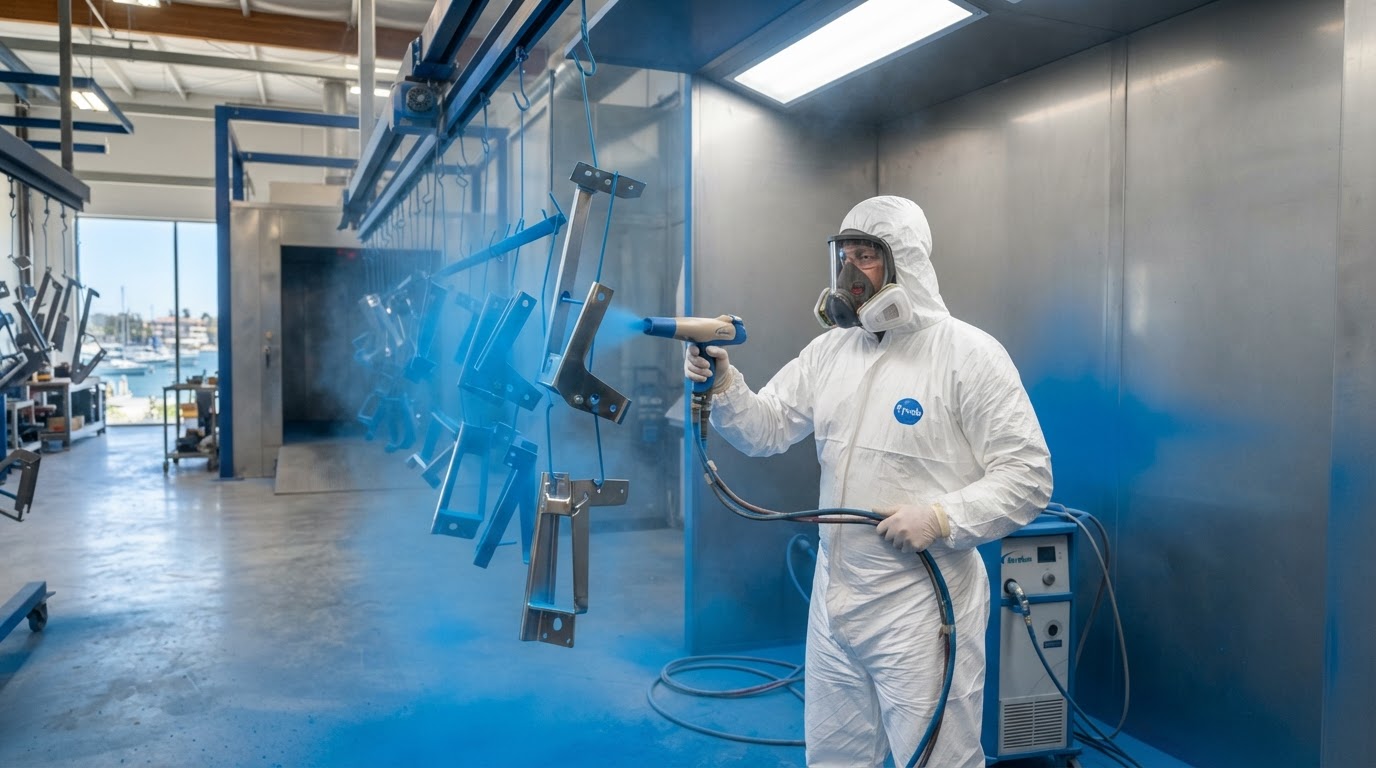
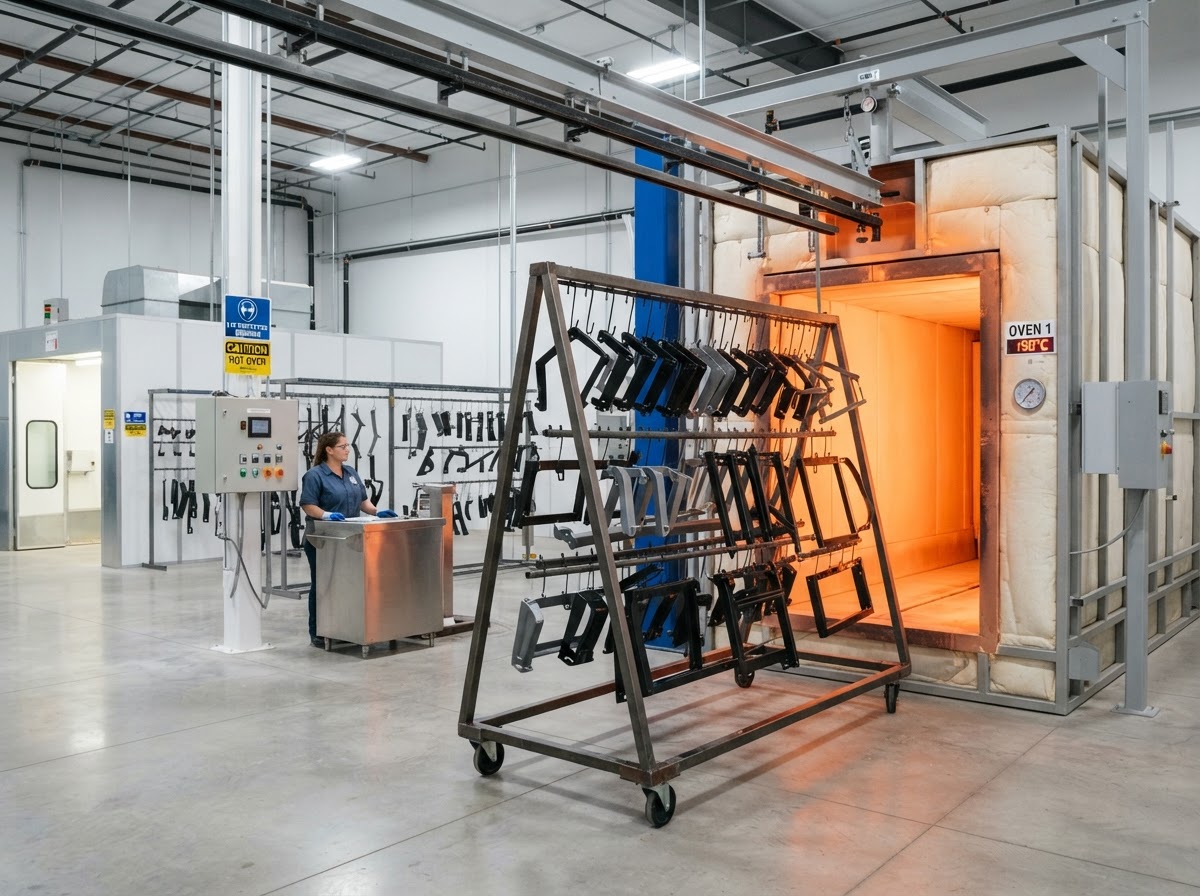
Powder coating starts as a dry powder of pigment and resin. The operator uses an electrostatic spray gun to charge the particles and blow them onto the grounded metal part. That part then goes into a baking oven, where the heat melts the powder and triggers a chemical reaction. The resin, usually a thermosetting polymer, cross-links into a hard film. That film is the cured finish. Until the cross-linking finishes, the coating is still thermoplastic - it can soften again under heat. Once fully cured, it will not remelt. That is what gives powder coating its durability and its corrosion resistance.
I once watched a shop try to speed up production by pulling parts out of the oven five minutes early. The parts looked fine. They felt smooth to the touch. But within two months, the coating on those automotive parts started lifting around bolt holes. The cure had not gone to completion, so moisture crept under the film. The shop had to strip and recoat every single piece. That is a costly lesson that a proper cured powder finish would have prevented.
Surface Preparation Is Half the Battle
Before any powder touches the metal, the surface must be clean and profiled. Sandblasting is the most reliable way to do that for steel and iron. The abrasive cuts away old paint, rust, and mill scale, and leaves a clean anchor pattern. That roughness gives the coating something to grip. Without it, even the best thermosetting polymer will delaminate. I have seen residential metal furniture blasted with too fine a grit, and the coating looked perfect in the shop but chipped off at the edges within a year. The shop in Pearland uses sandblasting as a standard step, and they pay attention to the profile depth. That attention matters because coating thickness can only compensate for so much. If the anchor pattern is shallow, the film has nothing to hold onto.
For aluminum and other non-ferrous metals, sandblasting still works, but the operator has to adjust the pressure and media. Aluminum is soft. Too aggressive a blast can warp thin sheets or leave a surface that is too rough for a smooth gloss level. I have seen shop owners switch to a gentler abrasive like glass bead for aluminum parts. The goal is the same: a clean, uniform surface that lets the cured powder finish bond evenly.
Color Matching and the Limits of Gloss
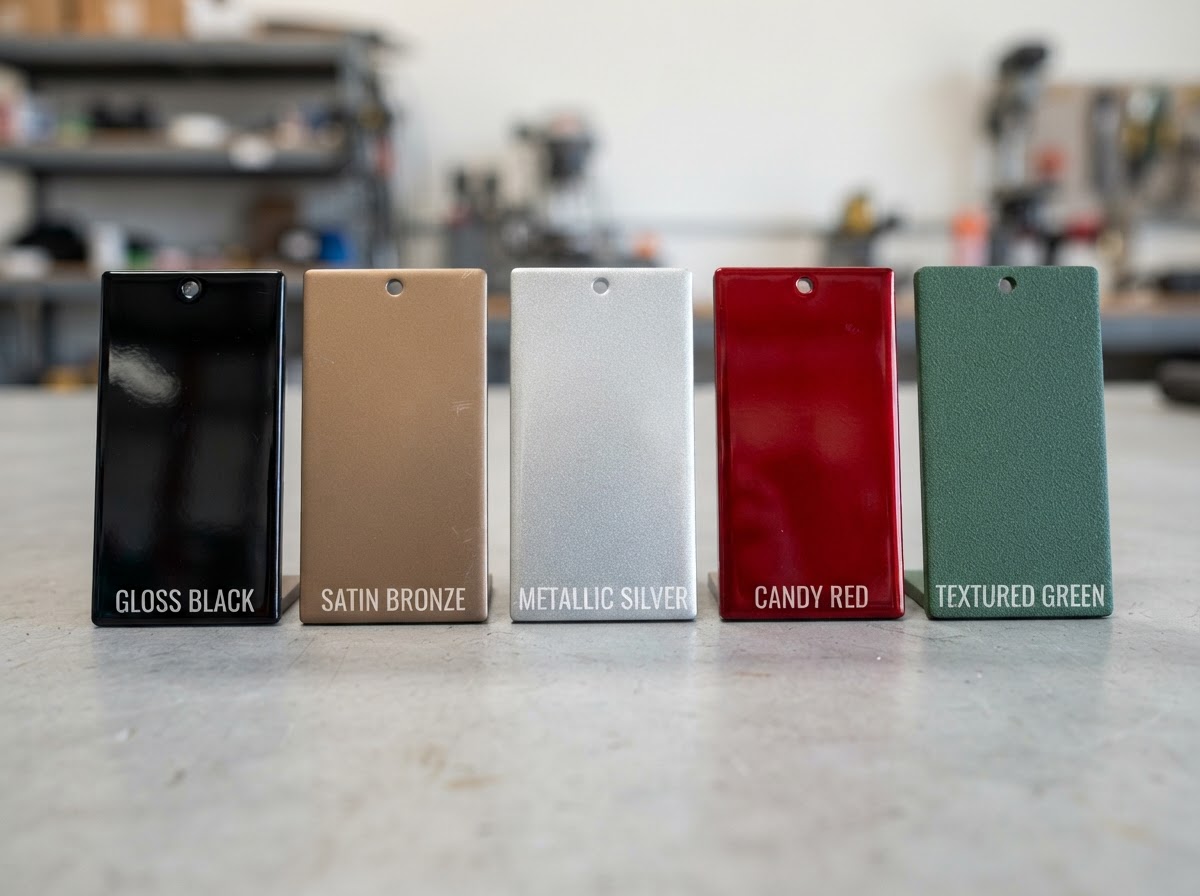
One thing customers often underestimate is how much the cure affects the final appearance. Color matching is tricky even under ideal conditions. Two parts coated with the same powder can come out looking different if one gets a slightly different oven temperature or a longer bake. The gloss level shifts. A part that cures at a lower temperature might read as semi-gloss, while the same powder at a higher temperature turns full gloss. That is not a defect. It is chemistry. The thermosetting polymer flows and levels differently at different temperatures.
I recall a job on a set of industrial equipment panels where the customer wanted a perfect match to an existing piece that had been coated years earlier. The shop had to run several test panels at different oven settings to dial in the cure. They found that a slightly extended bake at a moderate temperature gave the closest match. That kind of trial-and-error is normal. A good shop will tell you upfront that absolute color matching across different batches is difficult, especially if the gloss level has to match too. Texture coating can help hide slight variations, but it is not a cure for poor process control.
UV Stability and Outdoor Life
For parts that live outside - gates, fences, light poles, trailer hitches - UV stability matters. Not all powder coatings are created equal here. Polyester powders tend to chalk and fade faster than polyurethane or super-durable polyester blends. But even the best powder will degrade if the cure is insufficient. A properly cured powder finish has a denser cross-link structure, which slows UV penetration. I have seen two identical fence panels, one coated by a shop that rushed the bake and one by a shop that followed the powder manufacturer's cure schedule. After three years in the Houston sun, the rushed panel had lost its color and turned chalky. The properly cured one still looked good.
The local climate in Pearland and the surrounding Houston Bay Area is brutal on coatings. High UV, high humidity, and frequent rain. If you are coating residential metal that will sit outdoors, do not skimp on the cure. Ask the shop what temperature and time they plan to use. If they cannot tell you, that is a red flag.
How to Tell If a Cure Is Done Right
There are a few practical checks that anyone can do. First, look at the coating thickness. A good shop will measure it with a dry film thickness gauge. For most outdoor parts, you want between 2.5 and 4.5 mils. Too thin, and the coating lacks durability. Too thick, and it may crack or not cure evenly. Second, check the edges. If the coating is thin on sharp corners, the cure may not have flowed properly. That is a sign of poor application or an incorrect oven cycle. Third, ask about the oven. A shop that uses a convection oven with good temperature uniformity is more likely to deliver a consistent cured finish than one using a makeshift setup.
I have also seen shops use a simple solvent rub test to check cure. They wipe a small area with a solvent like MEK. If the coating softens or comes off, it was not fully cured. That test is destructive, so do not expect a shop to do it on your finished part. But a reputable shop will have done it on test panels from the same batch. That is a sign they care about quality.
The Trade-Offs in Production Speed
Every shop faces pressure to turn jobs around quickly. A full cure cycle can take twenty to forty minutes at temperature, plus cool-down time. That is time that the oven is occupied and the part is not being shipped. Some shops try to cut the cure time by increasing the oven temperature. That can work if the powder is formulated for a faster cure, but it usually degrades the coating's properties. The film may look fine initially, but its impact resistance and corrosion protection suffer. I have seen automotive parts that were over-baked at high temperature become brittle and crack around fastener holes. A slower, lower-temperature cure yields a tougher, more flexible film.
For industrial equipment that sees heavy use, the extra few minutes in the oven are worth it. For decorative residential metal, the same applies if you want the finish to last. The shop in Pearland seems to understand this balance. They do not rush the cure, and that is why their customers keep coming back.
A cured powder finish is not a magical layer. It is the result of careful preparation, precise application, and a complete thermal cure. When all three are done right, the coating delivers durability, corrosion resistance, and UV stability that outlasts most liquid paints by a wide margin. That is the value you pay for when you take a part to a shop that knows what it is doing. And in a climate like the Houston Bay Area, that value is hard to overstate.